
Private Label Clothing Manufacturing: The Complete Process and Industry Jargon Explained
2025-12-25
Launching a clothing brand is an exciting venture, but communicating with factories can feel like learning a new language. If you misunderstand the lingo, you risk production delays, unexpected costs, and poor quality products.
Whether you are choosing OEM (custom design) or ODM (ready-made design), the workflow of private label clothing manufacturing remains largely the same. In this guide, we will break down the entire production process and decode the “insider” terms you must know before placing an order.
The 5 Essential Industry Terms You Must Know
Before diving into the workflow, let’s master the vocabulary. Using these terms correctly will earn you respect from manufacturers and help you get what you want.
1. MOQ (Minimum Order Quantity)
The Barrier to Entry.
The MOQ is the smallest number of units a factory is willing to produce in a single order (e.g., 100 pieces per color).
Why it matters: Factories set this to cover their setup costs. Negotiating below the MOQ usually triggers a “surcharge” or higher price per unit.
2. Tech Pack
The Blueprint.
A technical document containing flat sketches, measurements, material specs, stitching details, and color codes.
Why it matters: Never expect a factory to guess your vision. A detailed Tech Pack minimizes errors and sampling costs.
3. Lead Time
The Clock.
The total time required from the moment you confirm the order to the day the goods are ready for shipping.
Why it matters: Fashion is seasonal. Missing the Lead Time means you miss your selling season (e.g., arriving with winter coats in spring).
4. Lab Dip
The Color Test.
Small swatches of fabric dyed to match your specific color code. Factories send these to you for approval before dyeing the bulk fabric.
Why it matters: Colors look different on different screens. Approving a physical Lab Dip ensures the final garment matches your vision.
5. FOB (Free On Board)
The Shipping Term.
A pricing term where the manufacturer covers all costs up to the goods being placed on the ship at the port of origin. You pay for ocean freight and insurance.
Why it matters: This is the standard pricing model in manufacturing. It tells you exactly where your responsibility for the goods begins.
The Step-by-Step Process of Private Label Clothing Manufacturing
Now that you speak the language, here is the roadmap from concept to delivery.
Step 1: Inquiry and Quotation
You submit your designs (Tech Pack or Reference Photos) to the factory.
What happens: The factory reviews the complexity, fabric choices, and quantity to calculate the cost.
Output: A detailed quote sheet including Fabric Cost, Trim Cost, CMT (Cut, Make, Trim labor cost), and Lead Time.
Step 2: Sampling (The Proto & Fit Phase)
Before mass production, you must approve samples.
Proto Sample: The first version to see if the design is viable.
Fit Sample: Used to check sizing and fit on a model.
Why it matters: Do not skip this. It is your only chance to fix design flaws cheaply.
Step 3: Material Sourcing and Lab Dip Approval
The factory sources the raw materials based on your Tech Pack.
Action: They will send you fabric swatches, buttons, zippers, and Lab Dips for approval.
Tip: Don’t approve colors via photos on WhatsApp/WeChat. Request physical samples.
Step 4: Pre-Production Sample (PPS)
This is the “Gold Standard.” It is the exact replica of what the mass-produced item will look like.
The Rule: Once you sign off on the PPS, you cannot complain about design details later. Any changes after this will cost extra money and delay the schedule.
Step 5: Bulk Production
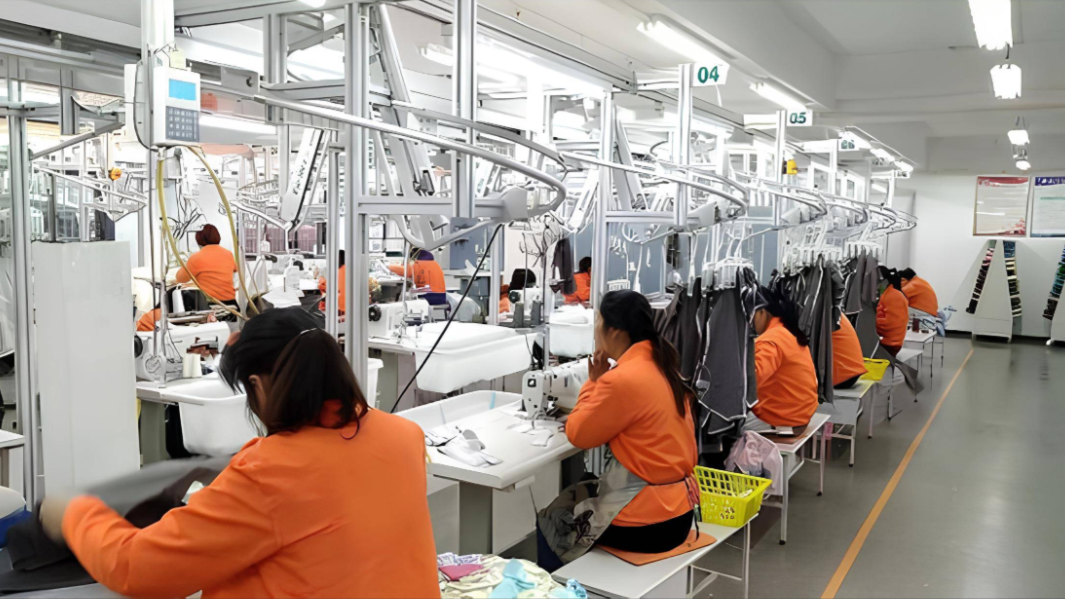
The factory cuts the fabric, sews the garments, and packs them.
Critical Check: A Mid-Production Inspection is recommended. This allows you to catch issues when 20-30% of the goods are done, giving the factory time to fix problems.
Step 6: Quality Control and Shipping
Once production is finished, a Final Inspection occurs. If goods pass QC, they are packed and shipped.
Terms: You will receive the Bill of Lading (B/L) and commercial invoices to claim your goods.
Common Pitfalls to Avoid
Rushing the Tech Pack: Vague instructions lead to “assumptions” by the factory.
Ignoring the Lead Time: Expecting 500 pieces to be made in 2 weeks is unrealistic.
Changing Designs Mid-Production: This is the #1 cause of delays and arguments.
Conclusion
Navigating the world of private label clothing manufacturing is a complex task, but it becomes manageable once you understand the process and the terminology. By mastering terms like MOQ, Tech Pack, and Lead Time, and by respecting the sampling workflow, you build a foundation of trust with your manufacturer.
Ready to start your journey? Ensure you have your Tech Pack ready and your budget aligned with your MOQs.
Frequently Asked Questions (FAQ)
What is the difference between CMT and FOB pricing?
CMT (Cut, Make, Trim) refers only to the labor cost. You must supply the fabric. FOB includes the cost of fabric + labor + transport to the port. FOB is the standard for most startups who want the factory to handle materials.
Can I mix different styles to reach the MOQ?
Some factories allow this (assorted MOQ), but many require a specific quantity *per style* or *per color*. This depends on the factory’s flexibility.
How long does the sampling process usually take?
Sampling can take anywhere from 2 to 6 weeks depending on the complexity of the garment and the number of corrections needed. Always budget extra time for sampling.
Consult experts: Custom Clothing Manufacturer